Finding a few inches of standing water across your hardwood floors or utility room is enough to make your stomach drop. Once you shut off the main valve, your next thought usually lands on the cost of cleaning it up. Nobody hands you a price menu when a supply line lets go at midnight, and getting straight numbers can feel impossible.
Typical Cost Ranges for Water Extraction
Most water extraction and basic mitigation jobs in the Coppell area run between $3.00 and $7.50 per square foot. If you are dealing with a localized clean-water leak from a water heater or an appliance supply line in a standard utility room, you might see total bills starting around $1,200 to $2,500 for the initial extraction and setup.
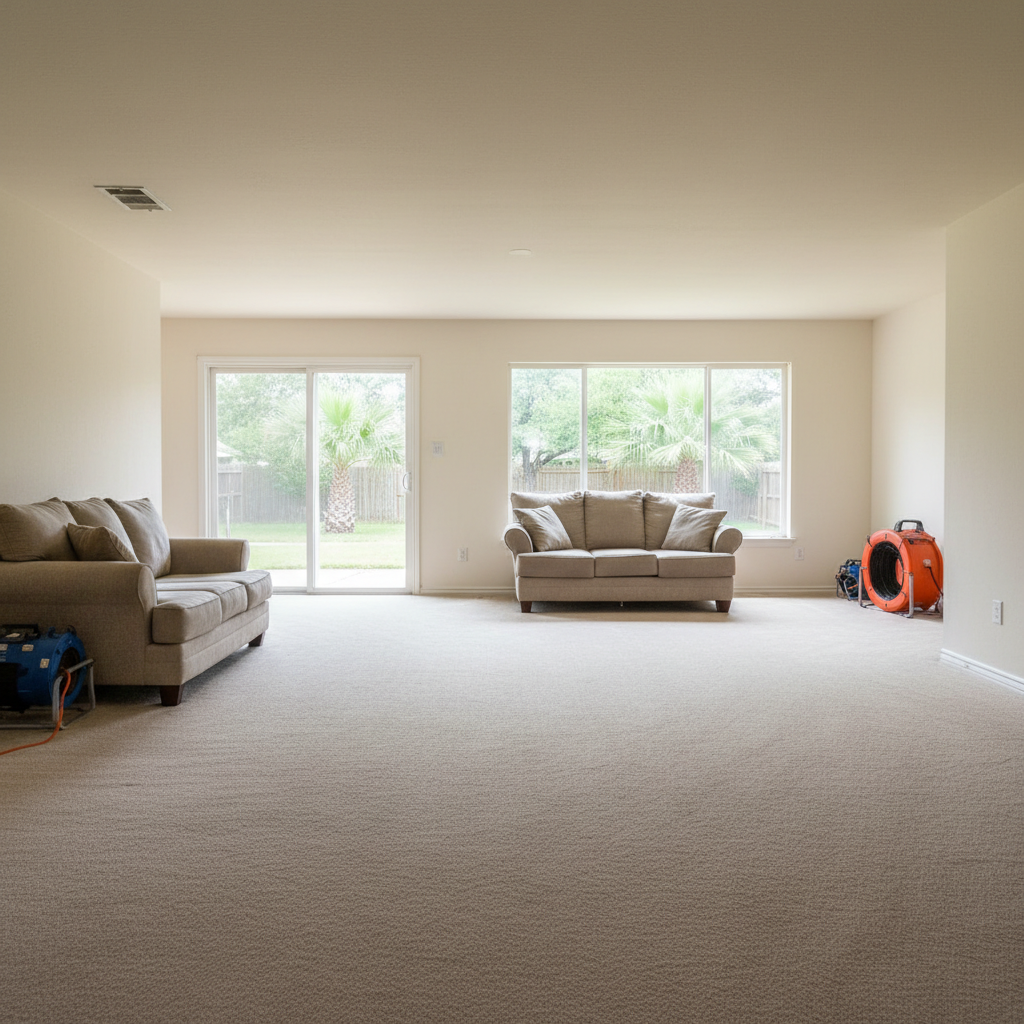
Larger spaces or multi-room intrusions that require heavy-duty truck-mounted extraction and days of running commercial air movers and dehumidifiers push totals past $4,000. If you live out in custom builds around Riverchase or older established blocks near Denton Creek where foundation shifts can trap moisture under slab edges, drying times often take longer, which changes the final tab.
What Actually Drives Your Quote Up
The price does not just depend on how many square feet are wet. Contractors look at specific site conditions that dictate how much labor and gear are required.
- Water Category: Clean water from a broken supply line is inexpensive to extract. Gray water from a dishwasher carries mild health risks. Black water from a sewer backup forces us to tear out drywall and flooring entirely, raising costs fast.
- Accessibility: Tight hallways, finished basements, or multi-story townhomes slow down equipment setup.
- Material Types: Thick carpet padding, engineered wood, and blown-in wall insulation hold onto moisture like a sponge, requiring more complex structural drying techniques.
What Should Be Included in a Professional Quote
When Legacy Restoration or any other reputable local outfit hands you an estimate for water services, it should not be a single flat mystery number scribbled on a napkin. A valid quote needs to spell out the specifics.
You should see line items for emergency service dispatch, hourly labor for extraction technicians, daily equipment rentals for high-speed air movers and low-grain dehumidifiers, and antimicrobial treatments. Moisture mapping and daily humidity readings are also standard practice so everyone knows when the framing has actually returned to dry standard levels.
How to Avoid Overpaying
North Texas weather swings can bring severe storms that leave contractors stretched thin, and that is when opportunistic pricing happens. Protect yourself by asking for an itemized breakdown before signing anything. Watch out for vague charges or blanket equipment fees that do not specify how many units are running or for how many days.
Always verify that your technician uses calibrated moisture meters rather than just touching the wall and guessing. If you are filing an insurance claim, make sure your restoration company works directly with Xactimate or industry-standard software so your adjuster speaks the same language. Getting a second set of eyes on a massive mitigation bill can save you thousands out of pocket.